The AEC has announced the Federal Seat of Batman will now be known as the Federal Seat of Cooper.
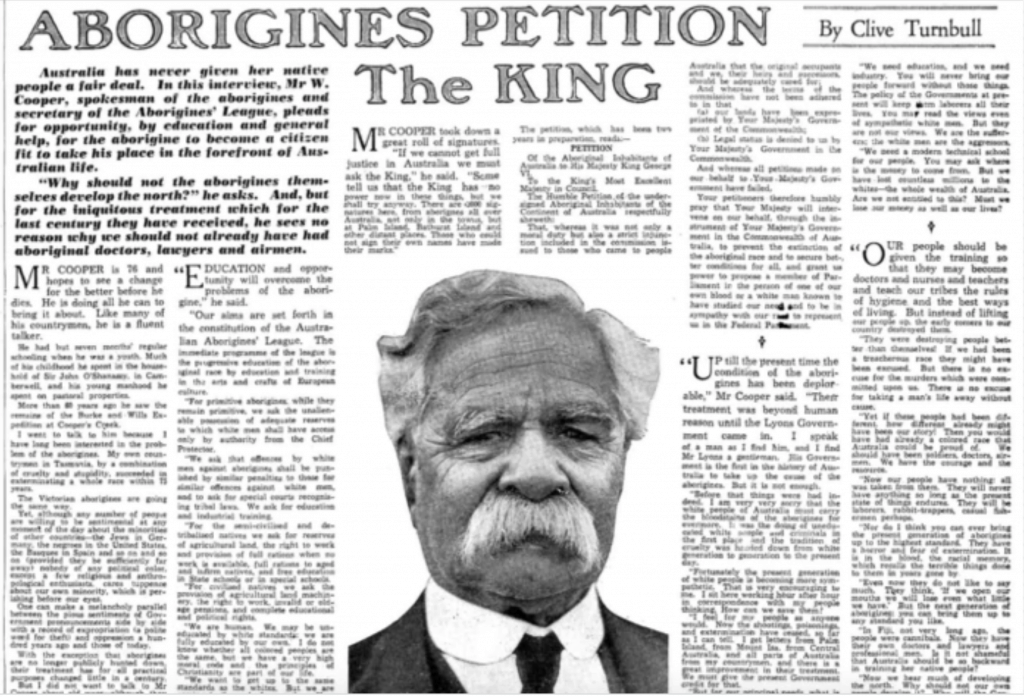
Melbourne, early summer 1938. Six people, on foot, leave Footscray headed to the city. For a spot of shopping, to take in some cricket or to go and see the latest movie picture at the Tivoli? No. The six led by a 77-year-old man approaching the end of his life were headed into Collins Street for a very different reason.
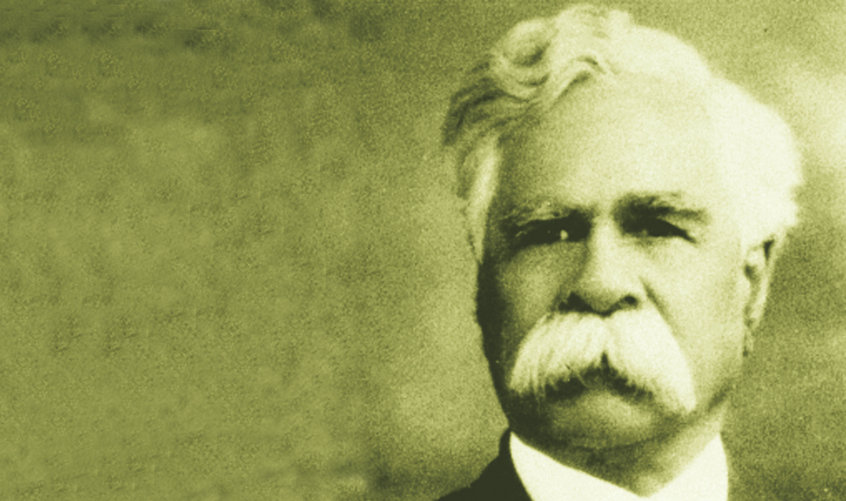
William Cooper
William Cooper, members of his family, and the Aboriginal Advancement League, of which he was a founding member in 1933, walked to Melbourne that December 6th to hand deliver a letter to the German Consulate.
In part, the letter read,
“On behalf of the Aboriginal inhabitants of Australia, we wish to have it registered and on record that we protest wholeheartedly at the cruel persecution of the Jewish people by the Nazi government in Germany.
We plead that you would make it known to your government and its military leaders that this cruel persecution of their fellow citizens must be brought to an end.”
Cooper, an outcast in his own country, representing his people who had suffered decades of persecution at the hands of European settlement, was appealing to the Third Reich to stop its’ persecution of Jewish people across Germany. This at a time when the rest of the world was turning a blind eye to the treatment of the Jewish people and other minorities across Europe. Despite being refused entry to the consulate itself, Cooper had made his point.
To this day, it’s hard to fathom the empathy, the courage and the foresight of Cooper and his fellow travellers to represent their community in such a powerfully dignified manner. Australia should be proud and today it has taken another small step in its’ appreciation of the man and his achievements.
The Australia Electoral Commission has announced the Federal Seat of Batman, named after John Batman, the syphilitic Tasmanian, founder of Melbourne and slaughterer of men, women and children of the Palawa people in his home colony, will be change to Cooper. The change is well overdue.
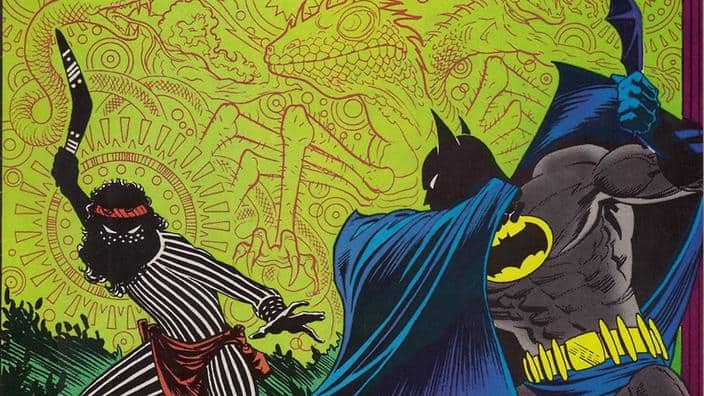
Wrong Batman!
The march on the German Consulate was a poignant moment of advocacy in a lifetime of activism to improve the lives of our people. A Yorta Yorta man born circa 1861 on country, Cooper grew up on the Maloga and Cummeragunja missions where he also worked as a shearer and labourer. It was in this hotbed of learning and activism and under the tutelage of Thomas Shadrach James his friend and brother-in-law, Cooper would not only learn to read and write but would also, much more importantly, find his voice.
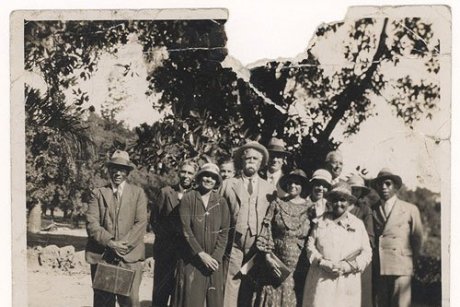
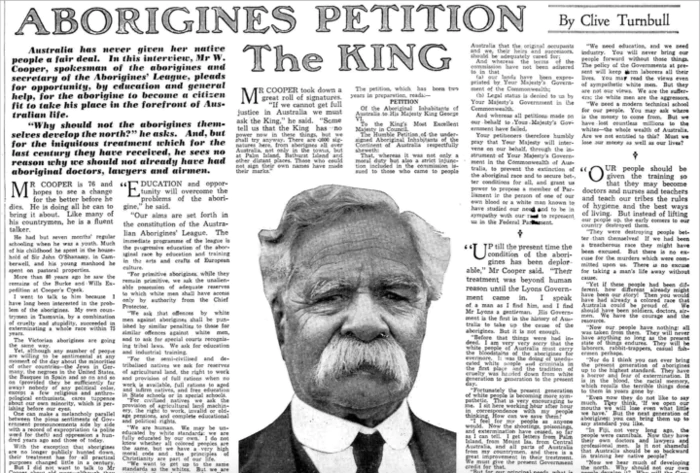
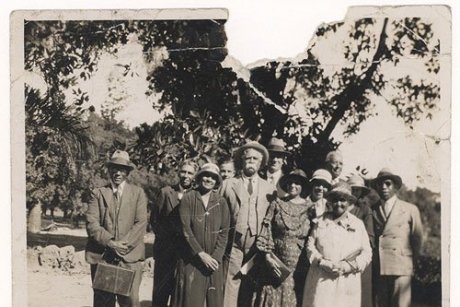
His voice and the voices of those around him would be heard. Cooper joined the Australian Workers’ Union, where his gift for speech and letter writing (see an example here) made him a strong representative for Aboriginal communities across rural and regional Victoria and New South Wales. It was years of activism that eventually lead to the establishment of the Australian Aborigines League in 1934 to provide a formal advocacy body to highlight the plight of Aboriginal people all over the country. Cooper was a founding member along with, Margaret Tucker, Eric Onus, Anna and Caleb Morgan, and Shadrach James.
Taken at the first meeting of Aborigines Advancement League.
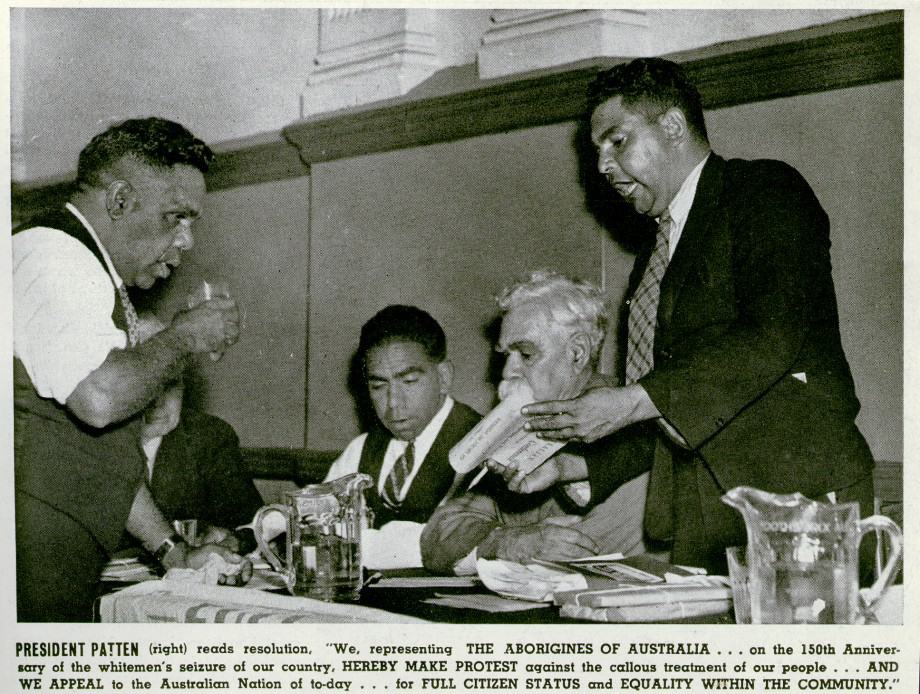
Another act of Cooper’s advocacy was to lead the first Aboriginal, deputation to a prime minister. Cooper and his comrades had collected the signatures of 1814 Aboriginal Australians from across the country to ask the government to take federal control of Aboriginal affairs. This act was in truth the first steps towards what eventually would become the basis for the 1967 referendum. Cooper asked the government to forward the petition to King George VI, the government refused but the cause was not lost.
Perhaps Cooper’s greatest act of advocacy was to rally fellow leaders such as Doug Nicholls and William Ferguson to call for the establishment of Day of Mourning on January 26 every year. A day to recognise the impact that European settlement has on Aboriginal Australians. I would argue that it was this act that led to what was then called, National Aborigines Day, and which has done more to tap away at the Australian psyche and its treatment of the First Peoples.
Credit: Mitchell Library, State Library of NSW – MLQ059/9
Cooper’s advocacy would continue unabated until his death in Mooroopna in1941. He is buried in Cummeragunja.
William Cooper’s leadership and advocacy is something that all Australians should be proud of. He is an important figure in our collective story. His acts, in the context of the times in which he lived, gives insight not only into him but to who we were and have become.
I am, along with hundreds of others, a proud descendant of Cooper and today’s announcement by the AEC has made us proud.
Readers please be advised that this article mentions a person who has passed away. 3August 2026 “Felipe’s life mattered. His death mattered. What we learn…
This Aboriginal and Torres Strait Islander Children’s Day, we have an opportunity to reflect on something remarkable. Across Victoria, our Aboriginal and Torres Strait Islander…
A reflection on Sorry Day and Reconciliation Week 2026
It’s Sorry Day and Reconciliation week and I’m reminded again that language matters. White people tell me this constantly. Use the right language. Tone it…
Subscribe
I would like to receive the IndigenousX monthly newsletter